Quick Answer Box
Crimson Desert puzzle challenges are environmental, clue-based, and tied to exploration across Ancient Ruins, hidden chambers, doors, and map locations like Duskwood. Most solutions rely on nearby visual clues, symbols, dials, statues, or abilities like Blinding Flash. Many puzzles reward an Abyss Cresset and an Abyss Artifact.
Introduction
If you’re looking for a Crimson Desert puzzle solution, the first thing to understand is that the game does not use one single puzzle style. Instead, it blends environmental logic, symbol matching, hidden mechanisms, ruin-based exploration, and skill-based interaction into one system that rewards observation more than guessing.
That matters because many players assume they’re dealing with a simple lock-and-key puzzle when the real answer is usually in the room itself. In practical terms, Crimson Desert puzzles are designed to make you read the space: murals, statues, symbols, vines, water, and hidden fixtures all matter.
This guide gives you Crimson Desert puzzle solutions explained in a simple format so you can move through the game faster and with less frustration. It also shows you how to solve Crimson Desert ruins by reading the clue source first, then acting on it.
What Crimson Desert puzzles are
A Crimson Desert puzzle is an exploration challenge built into the game world, usually found in Ancient Ruins, chambers, locked doors, and special map locations. Instead of asking you to solve abstract riddles, these puzzles usually ask you to interact with the environment in a specific way: rotate a statue, align symbols, burn vines, drain water, or trigger a hidden mechanism.
That design fits the way the game has been shown in official gameplay footage and early previews, which highlight exploration, combat, traversal, and environmental interaction as core systems. The puzzle content sits naturally inside that broader structure rather than feeling like a separate minigame.
In other words, Crimson Desert puzzles are not about guessing the “right answer” from a text prompt. They are about noticing what the room is already telling you and then acting on that clue.
Why the puzzles matter
These puzzles are not just decorative. In many locations, solving them opens progression paths, reveals an Abyss Cresset, or rewards an Abyss Artifact. That makes them worth completing even if your main interest is exploration rather than completionism.
There’s also a practical reason to care: many Crimson Desert puzzle locations act like shortcuts through the map or gateways into hidden content. If you understand the puzzle logic early, you save a lot of time later when the game starts layering multiple mechanics into the same area.
For a beginner, that means puzzles are not a side concern. They are part of how the world is meant to be navigated.
You an also read about funny shooter 2
Why Most Players Get Stuck (And How to Avoid It)
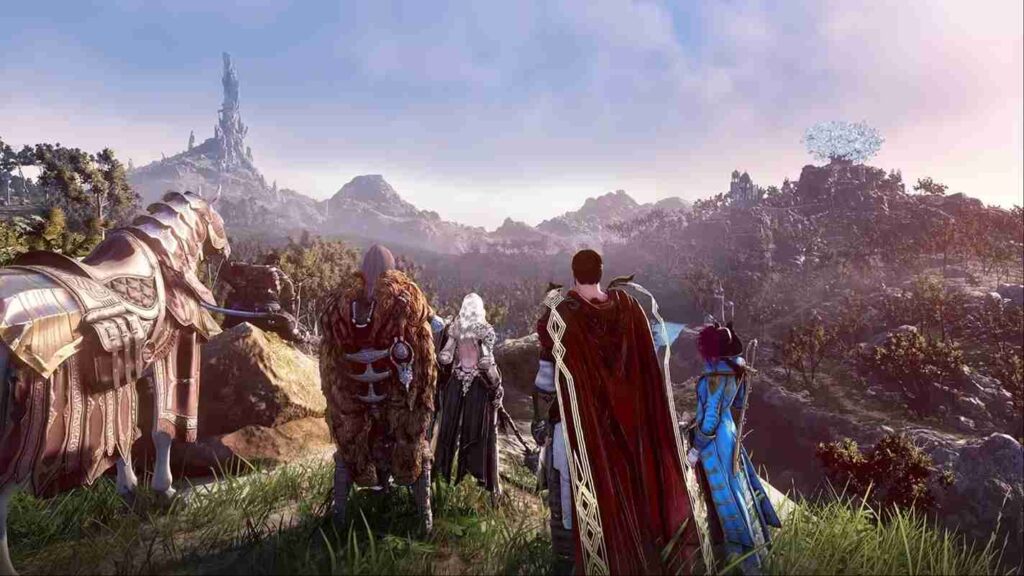
Most players get stuck in Crimson Desert puzzles for the same three reasons: they rush interaction, they ignore environmental clues, and they treat puzzles like combat challenges. The game usually expects observation first and action second, so the fastest way to solve puzzles is to slow down, find the clue source, and only then start interacting.
A lot of the frustration comes from missing the obvious. If a room is covered in vines, lit strangely, filled with symbols, or built around one central object, that is the game telling you where to focus. Once you switch from “What do I hit?” to “What is the room showing me?”, the puzzles become much easier.
In most cases, once you identify the clue source — whether it is a mural, statue, or hidden device — the puzzle becomes straightforward and rarely requires trial and error.
How the puzzle system works
The most important thing about Crimson Desert puzzles is that the game usually gives you a clue in the same area as the puzzle itself. That clue can appear as a mural, a statue arrangement, a symbolic wall carving, a hidden object behind vines, or an environmental pattern you are meant to copy or complete.
Here’s the trick most players miss: don’t rush in. Crimson Desert usually shows you the answer before it expects you to act. If you move slowly and scan the room first, the puzzle usually becomes much easier.
That is why the best approach is not brute force. It is observation, then interaction, then confirmation.
Main puzzle types in Crimson Desert
Ancient Ruins puzzles
Ancient Ruins are the clearest and most frequent puzzle sites in the game. Many guides describe them as “Mysterious Energy” locations or named ruins with their own mechanics, like rotating statues, dial systems, mural clues, or symbol sequences.
These puzzles are often the most rewarding because they tend to lead to key exploration rewards. They also teach the player the game’s core puzzle language: find the clue, read the room, then act on it.
Common Ancient Ruins patterns
- Statue alignment.
- Symbol matching.
- Hidden chamber activation.
- Dial rotation.
- Light-based reveals.
- Sequential object interaction.
The big takeaway is that Ancient Ruins are rarely random. Their design usually follows a visual logic that is meant to be discovered through the environment.
Door puzzles
Door puzzles are usually not “just a door.” In Crimson Desert, a door challenge can mean a locked gate, a chamber mechanism, a strongbox-style interaction, or a sequence puzzle hidden inside a ruin.
The important part is recognizing that the game often hides the real challenge behind a visual barrier. So if you see a locked doorway, the solution is often nearby rather than far away. Look for symbol panels, wheel devices, hidden switches, or object placements that match the structure.
If the room looks like a dead end, it usually is not. You are probably missing the clue.
You can also read about drift hunters unblocked
Light and vine puzzles
Some of the easiest-to-miss puzzles depend on visibility. Blinding Flash appears repeatedly in walkthroughs because it can burn away vines, reveal hidden mechanisms, and expose the next step in the puzzle chain.
These are especially easy to miss if you are rushing. A room may look complete, but the real interaction point is still hidden. That is why a lot of players get stuck in vine-covered ruins or dark chambers until they use a light-based ability.
If a room feels blocked, incomplete, or strangely decorative, try revealing it first before trying to solve it.
Statue and orientation puzzles
Statue puzzles usually ask you to rotate one or more objects until they point at a center point, match a mural, or line up with each other. These are common in Ancient Ruins and are often among the most satisfying puzzles because the solution is visually clear once you know what to look for.
Most of these puzzles become much easier once you identify the central anchor point. The whole room is usually built around that one object, so your job is to make the rest of the room agree with it.
This is a good example of how Crimson Desert uses spatial logic instead of text-heavy clues.
Grid and sequence puzzles
Some of the trickier Crimson Desert puzzle rooms use button grids, symbol sequences, or ordered interactions. You may need to hit panels in a certain order, align multiple symbols, or move pieces into a pattern shown elsewhere in the room.
This is where players often waste time by guessing. If there is a mural, a wall drawing, or a hidden symbol panel nearby, that clue is often more useful than brute force.
When in doubt, look for pattern repetition. The answer is usually already in front of you.
What is a Crimson Desert puzzle?
A Crimson Desert puzzle is a world-based challenge that requires players to solve a room, ruin, or mechanism by using environmental clues. These puzzles usually involve statues, symbols, light, doors, vines, dials, or hidden chambers, and they often reward an Abyss Cresset or Abyss Artifact when completed.
How to solve every Crimson Desert puzzle faster
Step-by-step method
- Identify the puzzle type first. Check whether you are dealing with a door, statue, ruin, light, or grid-based challenge.
- Scan the room for clues. Look for murals, symbols, hidden switches, statues, vines, water, or glowing markers.
- Use Blinding Flash when the room feels incomplete. If vines, shadows, or hidden layers are blocking your view, this ability is often the key.
- Match the clue to the mechanic. Rotate if the clue shows direction, press in sequence if the clue shows order, or align if the room shows symmetry.
- Check for a room state change. Many puzzles progress in stages, so the environment should visibly change after the correct action.
- Search for the reward or next phase. After the final action, look for the Abyss Cresset, a passage opening, or a chamber reveal.
This is the fastest consistent approach because it works with the way Crimson Desert appears to structure its exploration content: clue first, interaction second, reward after confirmation.
Crimson Desert Duskwood puzzle solution
The Crimson Desert puzzle Duskwood search usually refers to the Duskwood Hill Ruins puzzle. This is one of the better-known examples because it hides the real puzzle behind vines and uses a central pedestal or pillar interaction.
The broad solution pattern is:
- Burn the vines with Blinding Flash.
- Reveal the hidden interaction point.
- Use Stab on the pedestal.
- Adjust the pillar heights until the correct arrangement appears.
What makes this puzzle easy to misunderstand is that the first obstacle is visual, not mechanical. If you do not fully reveal the room first, you may never notice the real solution prompt.
That is a classic Crimson Desert design choice: the game uses the environment itself as part of the puzzle.
Crimson Desert puzzle door Mudridge Cabin
The Crimson Desert puzzle door Mudridge Cabin search is best understood as a strongbox or grid-style puzzle rather than a simple locked door. Verified walkthrough-style resources describe Mudridge Cabin as a puzzle box challenge where the objective is to rearrange parts into the correct pattern rather than simply open a door with a key.
That is an important distinction for search intent. Players often search “door” because the room looks locked, but the actual answer is usually a panel, box, or visual sequence puzzle inside the location.
If you are stuck there, look for:
- button grid patterns,
- number or position clues,
- and any nearby visual hint that matches the box layout.
Crimson Desert bowsprit puzzle, sanctum puzzle, and near-camp searches
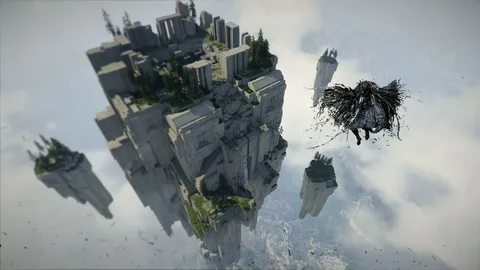
Queries like Crimson Desert bowsprit puzzle, Crimson Desert sanctum of absolution puzzle, and Crimson Desert puzzle near camp usually point to location-based environmental interactions rather than one universally named puzzle type. The reliable pattern in Crimson Desert is that the location itself determines the mechanic.
So if the room has:
- a mural, it may be a clue puzzle;
- a statue cluster, it may be an orientation puzzle;
- a hidden mechanism, it may be a light or vine puzzle;
- a locked chamber, it may be a door or sequence puzzle.
That classification step is the difference between a quick solve and a frustrating stall.
Comparison table
| Puzzle Type | What It Usually Means | What You Should Look For | Common Outcome |
| Ancient Ruins puzzle | A full environmental challenge inside a named ruin | Murals, statues, dials, symbol walls | Abyss Cresset or artifact |
| Door puzzle | A locked chamber, gate, or mechanism | Nearby clue panels, symbols, switches | New area access |
| Light puzzle | A hidden or blocked mechanism | Vines, shadows, glow points | Reveal the next step |
| Statue puzzle | Object alignment challenge | Central anchor, facing direction, symmetry | Room activation |
| Grid puzzle | Sequence-based interaction | Shapes, button layouts, pattern clues | Strongbox or chamber reward |
Fastest puzzle-solving tips
1. Look for the anchor point
Most statue and chamber puzzles are built around one center object. Once you find it, the rest of the room usually makes sense.
2. Use your visibility tools early
If the room feels blocked, try Blinding Flash before you spend time guessing. Crimson Desert uses visibility as a clue more often than many players expect.
3. Check walls before touching switches
Murals and symbols often explain the answer. That is especially true in multi-stage ruins where the room itself is giving you instructions.
4. Do not brute force every puzzle
Random inputs can work on simple panels, but they are a bad strategy for most Crimson Desert puzzles. The game is usually telling you what to do somewhere nearby.
5. Solve the room in stages
If the puzzle has hidden layers, treat each unlock as a small victory. Many ruins are designed to change shape after each successful step.
Beginner mistakes checklist
Common mistakes to avoid
- Skipping the clue scan. Many players interact too early and miss the answer hidden in the room.
- Ignoring Blinding Flash. Vine-covered areas and hidden devices often need it.
- Treating every locked room like a door puzzle. Some are actually grid or strongbox puzzles.
- Forgetting that puzzles can have phases. One correct action may reveal the real puzzle.
- Relying on guessing instead of symmetry. Statue and ruin rooms often use visual balance as the clue.
If a puzzle feels impossible, step back and re-scan the space. The missing detail is usually nearby.
Hardest puzzle locations to watch for
Some puzzle locations tend to feel harder because they hide the logic more aggressively than others.
Likely tougher puzzle styles
- Duskwood Hill Ruins: hidden behind vines and a pedestal interaction.
- Multi-statue ruins: require orientation logic rather than obvious prompts.
- Strongbox or grid rooms: easy to overcomplicate because the answer is sequence-based.
- Multi-stage ruins with murals: more likely to make players miss the first clue.
These are the puzzles where patience matters most. The clue is usually there, but the room may not reveal it immediately.
Why the content feels credible
Crimson Desert has been shown through official gameplay trailers and early gameplay previews from Pearl Abyss, which gives a real basis for describing the game’s exploration style, environmental interaction, and visual clue design. That matters because the puzzle structure is not guesswork; it is grounded in how the game has actually been presented.
So instead of treating the guide like speculation, it is better to frame it as a practical read of the patterns the developer has shown and the walkthrough coverage has documented.
FAQ
What is the easiest Crimson Desert puzzle type?
The easiest puzzles are usually simple statue alignment or basic clue-match rooms. These are faster because the answer is visible in the environment and the room state changes clearly when you solve them.
How do I solve the Duskwood puzzle in Crimson Desert?
Burn the vines with Blinding Flash, reveal the pedestal, then use Stab to adjust the pillar heights. The key is to fully expose the mechanism first so you can see the actual interaction point.
Do Crimson Desert puzzles always reward something useful?
Many of them do. Ancient Ruins puzzles commonly reward an Abyss Cresset and an Abyss Artifact, which makes them worth completing even if you are mainly exploring.
What should I do if a puzzle looks like a door but will not open?
Look around for murals, dials, symbols, or a hidden grid. In Crimson Desert, a “door” is often actually a sequence or chamber puzzle disguised as a locked structure.
Is Blinding Flash important in Crimson Desert puzzle solving?
Yes. It is one of the most useful abilities for puzzle content because it can remove vines, expose hidden objects, and reveal parts of a room you would otherwise miss.
Are Crimson Desert puzzles hard for beginners?
They can be, mainly because the game expects you to notice environmental clues. Once you learn to scan murals, statues, and hidden mechanisms first, the puzzles become much easier to handle.
Final Conclusion
Crimson Desert puzzle solving gets much easier once you stop thinking in terms of random locks and start thinking in terms of environmental logic. If you focus on clues, use the right ability, and treat each room as a visual system, the Crimson Desert puzzle experience becomes faster, clearer, and far more rewarding.