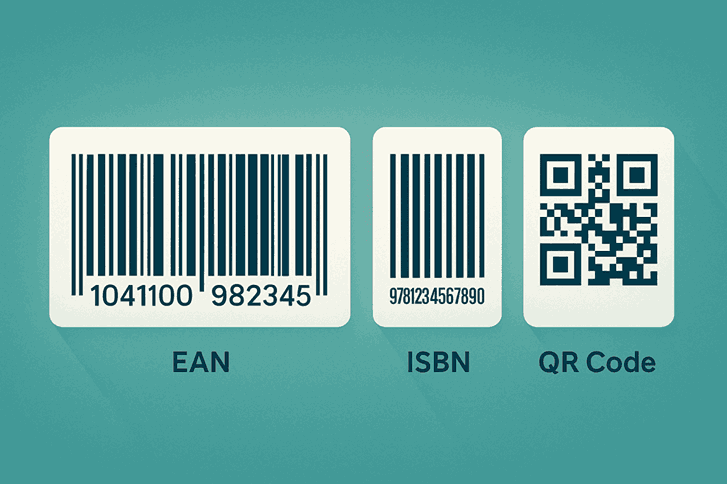
Universal Product Codes (UPC) and European Article Numbers (EAN) are fundamental components of modern retail and supply chain systems. These numeric identifiers are embedded within barcodes and allow products to be quickly scanned, tracked, and managed across global markets. Whether in supermarkets, warehouses, e-commerce platforms, or logistics hubs, UPC and EAN barcodes provide the backbone for efficient product identification.
As commerce becomes increasingly digitized, businesses and developers rely on accurate barcode databases to verify product information, reduce errors, and streamline operations. Platforms such as BarcodeReport.com play a critical role in supporting this ecosystem by offering extensive UPC and EAN barcode data services to users worldwide.
Understanding UPC and EAN Barcode Structures
UPC barcodes are widely used in North America and consist of 12 numeric digits. These digits represent specific information, including the manufacturer identification number and the unique product code. EAN barcodes, commonly used internationally, typically contain 13 digits and follow a similar structure but accommodate global identification standards.
The structure of these codes ensures that each product has a unique identifier. This uniqueness allows retailers to maintain accurate inventory records and enables point-of-sale systems to retrieve pricing and product descriptions instantly. Developers integrating barcode scanning features into mobile applications or web systems must understand these formats to ensure compatibility and reliability.
By accessing comprehensive barcode datasets through services like BarcodeReport.com, businesses can validate and cross-reference product codes efficiently, reducing the risk of duplicate or invalid entries.
The Role of Barcode Databases in Digital Applications
Barcode scanning has expanded beyond traditional retail environments. Today, mobile applications, inventory management systems, and e-commerce platforms integrate barcode recognition to automate data entry and enhance user experiences. When a barcode is scanned, the application queries a database to retrieve relevant product details.
A reliable barcode database must contain accurate product names, brand information, packaging details, and sometimes images. For developers, accessing such data via an API or downloadable dataset simplifies integration and reduces development time. Instead of manually compiling product information, they can leverage centralized services.
BarcodeReport.com supports global users by maintaining a vast repository of UPC and EAN codes. This extensive coverage is particularly beneficial for applications that operate internationally, where products from multiple regions must be recognized seamlessly.
Benefits for Retailers and E-Commerce Businesses
Retailers depend heavily on barcode data for inventory tracking and pricing accuracy. When stock is scanned during receiving or checkout, systems update quantities automatically. This automation reduces human error and improves operational efficiency.
In e-commerce environments, accurate barcode data enhances product listings and search functionality. Many online marketplaces use UPC or EAN numbers to match products to existing catalog entries. A verified barcode ensures that listings are associated with the correct product specifications and brand information.
Businesses utilizing services like BarcodeReport.com can verify barcode authenticity and obtain supplemental product details. This verification process protects against counterfeit goods and incorrect catalog entries, which can damage brand reputation and customer trust.
Supporting Developers with Integration Solutions
Developers building barcode-enabled applications require more than raw numeric codes. They need structured data that can be integrated via APIs or databases. Applications such as shopping comparison tools, inventory scanners, price-checking apps, and logistics management platforms rely on fast and accurate data retrieval.
A global barcode data provider offers scalability and consistency. Instead of sourcing information from multiple fragmented databases, developers can connect to a centralized system. This reduces complexity and ensures consistent data formatting.
By providing accessible and organized barcode datasets, BarcodeReport.com helps developers streamline application development. Reliable data services enable smoother deployment, improved performance, and enhanced user satisfaction.
Enhancing Supply Chain Transparency
Supply chains have become increasingly complex, spanning multiple countries and distribution networks. UPC and EAN codes facilitate transparency by allowing products to be tracked at every stage of the journey. From manufacturer to distributor to retailer, barcode scanning records movement and inventory status.
Accurate barcode data contributes to better forecasting and inventory planning. Companies can analyze sales trends, monitor stock levels, and prevent shortages. In industries such as food and pharmaceuticals, barcode traceability also supports safety compliance and recall management.
Access to a comprehensive barcode database through platforms like BarcodeReport.com strengthens supply chain visibility. Businesses can confirm product details quickly and ensure that all stakeholders are working with consistent identification data.
Global Accessibility and Multinational Use
One of the key strengths of UPC and EAN systems is their global compatibility. While UPC is predominant in North America and EAN is widely used internationally, both systems follow standardized principles that allow cross-border commerce.
An English-language platform serving global users must provide inclusive coverage across multiple regions. Developers building apps for international audiences cannot rely solely on region-specific databases. Instead, they need extensive coverage that recognizes products from various markets.
BarcodeReport.com addresses this need by offering a vast global database. Its international scope makes it particularly valuable for multinational retailers, cross-border e-commerce platforms, and globally distributed applications.
Data Accuracy and Verification
The reliability of any barcode service depends on data accuracy. Incorrect product associations can result in pricing errors, customer dissatisfaction, and operational inefficiencies. Therefore, maintaining an updated and validated database is essential.
Barcode verification services allow users to confirm whether a UPC or EAN is properly formatted and assigned. Validation tools can detect invalid check digits or improperly structured codes, preventing integration errors.
By focusing on data integrity, BarcodeReport.com supports businesses that require dependable barcode information. Accurate data not only improves operational performance but also strengthens trust between retailers, developers, and consumers.
Innovation in Barcode Technology
Although traditional linear barcodes remain dominant, technological advancements are expanding the capabilities of product identification systems. QR codes, digital watermarks, and enhanced data carriers are supplementing UPC and EAN systems in certain industries.
Despite these innovations, UPC and EAN codes continue to serve as foundational identifiers in retail and logistics. Their simplicity, cost-effectiveness, and universal recognition ensure ongoing relevance.
Data service providers that evolve alongside technological trends maintain competitive advantage. By continually updating and expanding their databases, platforms like BarcodeReport.com remain essential resources in the evolving digital commerce landscape.
Conclusion
UPC and EAN barcode data are indispensable in today’s interconnected commercial environment. They enable accurate product identification, streamline inventory management, and power countless digital applications. From retailers and supply chain managers to developers building innovative scanning tools, reliable barcode data underpins efficiency and transparency.
A comprehensive and globally accessible platform such as BarcodeReport.com plays a vital role in supporting these needs. By offering extensive UPC and EAN barcode data services, it empowers businesses and developers to integrate scanning technology seamlessly and operate with confidence in global markets. As commerce continues to expand and digitize, dependable barcode data services will remain a cornerstone of successful operations worldwide.