Choosing the right water heater plays a major role in managing your home’s energy consumption and keeping your utility expenses in check. With water heating accounting for about 13 percent of a typical household’s energy use, switching to an efficient model can yield noticeable savings year-round. For homeowners seeking reliable water heater installation services in Indianapolis, IN, understanding your options and the latest standards is critical before investing in a new unit.
Today’s market offers a variety of water heater types, each providing different levels of efficiency and upfront costs. The implications extend beyond monthly utility bills; newer models and technologies can also minimize your environmental footprint. Whether you’re renovating, building a new home, or simply replacing an aging system, understanding the pros and cons of each option will help you make an informed decision that aligns with your budget and sustainability goals. Alongside energy savings, federal, state, and local incentives have made upgrading to efficient water heaters more affordable than ever. Not only do you benefit from lower recurring costs, but you can also take advantage of rebates and credits specifically designed to offset the initial price of high-efficiency models. New government standards finalized in 2024 aim to help more households transition to advanced technologies, such as heat pump water heaters, which have been proven to substantially reduce energy use. These changes, combined with proper maintenance and smart settings, can mean years of worry-free hot water and lower bills.
Understanding Water Heater Types
Water heaters are generally categorized by how they store and distribute hot water, and each category offers different efficiency levels and benefits:
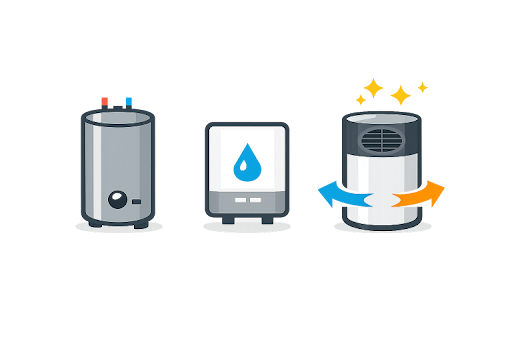
Storage Tank Water Heaters: These are the most common and feature an insulated tank where hot water is stored for use as needed. While familiar and easy to install, they often lose heat through the tank walls when not in use, a phenomenon known as standby heat loss.
Tankless (On-Demand) Water Heaters: These heaters only warm water when you turn on the tap, nearly eliminating standby losses. They typically offer higher efficiency, a longer lifespan, and a more compact footprint, though they can cost more upfront and may have lower flow rates in larger households.
Heat Pump Water Heaters: These use electricity to move heat from the surrounding air into the water. Heat pump models are two to three times more efficient than standard electric heaters, making them a top choice for maximum energy savings.
Benefits of Heat Pump Water Heaters
Heat pump water heaters are among the most energy-efficient residential water heaters available. The U.S. Department of Energy notes that these units can be two to three times more efficient than traditional electric resistance water heaters. Because heat pumps transfer existing heat instead of generating it directly, homes switching to this technology can see a substantial decrease in their annual energy costs. Over time, this offsets the higher purchase price through significant long-term savings. In addition, the reduced electricity or gas use helps minimize your household’s environmental impact. For more on energy-saving strategies and appliance guidance, resources like Energy Star offer helpful tips and product comparisons.
Energy Efficiency Standards and Savings
In April 2024, the U.S. Department of Energy finalized regulations that set higher efficiency standards for residential water heaters. These new standards are expected to save nearly $7.6 billion annually nationwide in energy and water bills, significantly reducing residential water-heating energy use by 21 percent. As outlined by the Natural Resources Defense Council, the move encourages the widespread adoption of advanced technologies such as heat pumps and high-efficiency gas water heaters. Upgrading to models that meet or exceed the 2024 standards ensures compliance and maximizes cost and energy savings in the years ahead.
You can also read about How to Respond to a Plumbing Emergency.
Financial Incentives and Rebates
Despite the higher upfront cost of the most efficient water heaters, multiple financial incentives can ease the transition. For instance, San Francisco residents are eligible for up to $1,200 in bill credits when replacing their water heater with a heat pump. On a federal level, tax credits cover up to 30 percent of installation costs for qualifying energy-efficient models. Many states and utility providers also offer their own rebates and bill credits, making it much more affordable to upgrade. Homeowners should review local programs before purchasing to maximize savings opportunities.
Maintenance Tips for Optimal Performance
Routine maintenance directly affects the longevity and efficiency of your water heater. Here are several best practices to keep your system in top condition:
Clean Heat Pump Filters: For heat pump models, filters should be cleaned or replaced every few months to ensure proper airflow and peak efficiency.
Set an Optimal Temperature: A thermostat setting of 120°F is widely recommended as it provides comfortable hot water while reducing heat loss and energy consumption.
Insulate Pipes and Tanks: Insulating exposed hot water pipes and tank surfaces is a cost-effective step to minimize heat loss and improve performance.
Conclusion
Selecting an energy-efficient water heater is a smart investment for homeowners looking to lower utility bills, enhance comfort, and promote environmental responsibility. By researching the types of water heaters, taking advantage of recent energy-efficiency standards, maximizing available financial incentives, and sticking to regular maintenance, you not only save money but also help reduce overall residential energy consumption. Staying informed and proactive in these areas ensures ongoing savings for years to come.