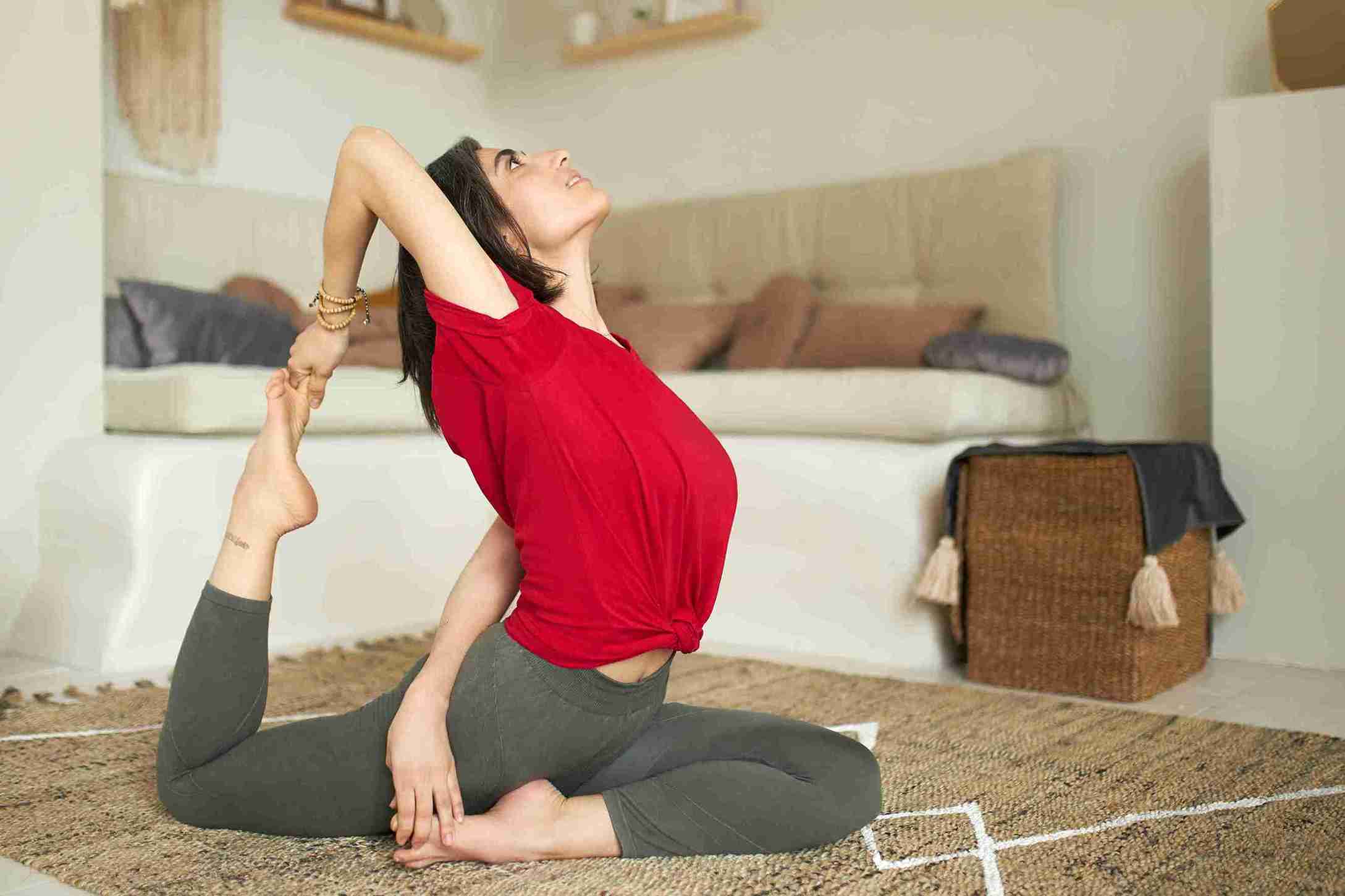
Not all back pain is the same. Maybe yours sits low, a dull ache across your lower back after too many hours at a desk. Maybe it’s higher up, a tight knot between your shoulder blades from hunching over a phone. Or maybe, frustratingly, your back actually started hurting after a yoga session that was supposed to help.
This is what most back pain advice gets wrong. It hands you a generic list of poses without asking where your pain is, what’s causing it, or whether those poses are even right for your situation. And that one-size-fits-all approach can leave you no better off, or occasionally worse.
The truth is that the best yoga poses for back pain depend on your specific situation. Lower back tension calls for different poses than upper back tightness. A sensitive condition like a herniated disc demands real caution. And beginners or seniors need gentler, more accessible options.
That’s exactly how this guide is organized. Instead of a random list, you’ll find targeted poses for lower, upper, and middle back pain, plus honest guidance on sensitive situations, poses to avoid, and why your back might hurt after yoga in the first place.
Before we begin, an important note: this is general information, not medical advice. Back pain has many causes, and if yours is severe, persistent, or tied to a specific condition, please consult a doctor or physical therapist before starting any new poses.
Strategic Summary
This guide organizes the best yoga poses for back pain by area and situation, so you can target your specific type of discomfort safely and effectively.
You’ll first learn how yoga helps back pain and the essential safety principles that apply to everyone, since gentle, careful practice is the foundation of relief.
The guide provides targeted poses for lower back pain, the most common complaint, focusing on gentle movements that release tension and build supportive strength.
You’ll also get dedicated poses for upper and middle back pain, areas often overlooked but frequently strained by modern posture and screen use.
Crucially, the guide addresses sensitive situations, including herniated and bulging discs, with clear guidance on caution and the importance of professional advice.
You’ll learn which poses to approach carefully and why your back might hurt after yoga, helping you practice more safely and avoid aggravating your pain.
Finally, the guide covers gentler options for beginners and seniors, including chair-based approaches. By the end, you’ll know exactly which poses suit your specific back pain and situation, empowering you to find relief safely rather than following generic advice that may not fit your needs.
You can also read about The Impact of Trees on Urban Life and Community Well-Being.
How Yoga Helps Back Pain
Yoga helps back pain by gently stretching tight muscles, strengthening the core and back that support the spine, improving posture, and reducing stress. Together, these effects can ease discomfort and help prevent it from returning.
Understanding why yoga works helps you use it wisely.
The first benefit is releasing tension. Much back pain comes from tight, overworked muscles caused by sitting, poor posture, and stress. Gentle stretching helps relax these muscles, easing discomfort and improving mobility.
The second is building support. A strong core and back act like a natural brace for your spine. Certain poses strengthen these muscles, which helps stabilize the spine and reduce strain over time.
The third is posture and breath. Many poses gently improve spinal alignment, counteracting the hunched positions of daily life, while yoga’s slow, deep breathing calms the nervous system, since stress often amplifies how we feel pain.
Importantly, yoga isn’t an instant cure. It’s a gentle, gradual practice that rewards consistency over intensity. Small, regular efforts do far more for your back than occasional aggressive stretching. With that foundation in mind, let’s cover safety before targeting specific areas.
Safety First: Read Before You Start
Move slowly, never force a pose, and stop immediately if you feel sharp or shooting pain. Consistency matters more than intensity. If your back pain is severe, persistent, or linked to a specific condition, consult a doctor before practicing.
Safety is the foundation of everything that follows, so please don’t skip this.
The golden rule is to listen to your body. A gentle stretch is good; sharp, shooting, or worsening pain is a clear signal to stop. Never push through pain in pursuit of a deeper stretch.
Because back pain has many causes, the right poses for one person can aggravate another’s condition. This is especially true for specific issues like disc problems. Understanding the cause of your pain, ideally with professional input, helps you choose safely.
Start gently and build gradually. Begin with short sessions and a few poses rather than an ambitious routine. Use props like cushions and blankets freely, as they make poses safer and more comfortable.
And know when to seek help. If your pain doesn’t improve within a few weeks, is severe, or limits daily movement, gentle exercise may not be enough. A doctor or physical therapist can guide you on which poses to favor or avoid for your specific situation.
Best Yoga Poses for Lower Back Pain
For lower back pain, gentle poses like Cat-Cow, Child’s Pose, Knees-to-Chest, and the Supine Twist work well. They release tension in the lower back and hips while gently mobilizing the spine.
Lower back pain is the most common complaint, so these gentle releases are a great starting point.
Cat-Cow is an excellent beginning. On your hands and knees, slowly alternate between arching your back downward and rounding it upward, following your breath. This gently mobilizes the spine and eases lower back stiffness. Flow through several slow rounds.
Child’s Pose is a soothing rest. Kneel and sit back toward your heels while walking your hands forward and lowering your torso, resting your forehead down. It gently stretches the lower back and hips. Bend your knees wider or use a cushion for comfort, holding for several breaths.
Knees-to-Chest offers simple relief. Lie on your back and gently draw both knees toward your chest, holding them softly. This releases the lower back and can feel wonderful after sitting all day. Rock gently side to side if it feels good.
The Supine Twist is a gentle reclining twist. Lying on your back, drop both bent knees to one side while keeping your shoulders grounded, then switch sides. It releases lower back tension beautifully. Keep it gentle, using a cushion under the knees for support, and never force the twist.
Best Yoga Poses for Upper Back Pain
For upper back pain, focus on poses that open the chest and shoulders and mobilize the upper spine, such as Cat-Cow, Thread the Needle, and gentle seated twists. These ease tension from hunching over screens.
Upper back pain often gets overlooked, yet it’s incredibly common in our screen-focused world.
Upper back tension usually comes from rounding forward over phones, laptops, and desks, which tightens the chest and strains the muscles between the shoulder blades. The remedy is gently opening the front of the body and mobilizing the upper spine.
Cat-Cow helps here too, as it mobilizes the entire spine, including the upper back. Focus on really rounding and arching through the area between your shoulder blades as you move.
Thread the Needle is excellent for the upper back and shoulders. From hands and knees, slide one arm underneath your body and across, lowering that shoulder gently toward the floor. This releases tension between the shoulder blades. Hold gently, then switch sides.
Gentle chest openers counteract hunching. Simple seated or standing movements that draw the shoulders back and open the chest help reverse the forward-rounded posture that causes upper back strain. Combined with gentle upper back stretches, these poses relieve the tightness that builds from daily screen use, restoring comfort to this frequently strained area.
Best Yoga Poses for Middle Back Pain
For middle back pain, gentle twists and extension poses like seated twists, Sphinx, and Cat-Cow help. These mobilize the mid-spine and relieve stiffness in the area between the ribs and lower back.
Middle back pain, around the area behind the ribs, has its own helpful approaches.
The middle back, or thoracic region, can become stiff from prolonged sitting and limited rotation in daily life. Gentle movement in this area helps restore mobility and ease discomfort.
Gentle seated twists are especially useful for the middle back. Sitting tall, slowly rotate your torso to one side using your breath, keeping the movement gentle and spine long, then switch sides. Twists naturally mobilize the mid-spine. Never force the rotation.
Sphinx Pose provides gentle extension. Lying on your stomach, prop yourself on your forearms with elbows under your shoulders, gently lifting your chest. This creates soft extension through the mid and lower spine, counteracting forward hunching. Keep it gentle and lower down if you feel any pinching.
Cat-Cow once again earns its place, as its flowing motion mobilizes the middle back along with the rest of the spine. For middle back tightness, these gentle mobility and extension poses help restore movement and ease the stiffness that builds from static, forward-leaning postures.
Yoga for Herniated or Bulging Discs
Yoga may help a herniated or bulging disc, but only with gentle, carefully chosen poses and professional guidance. Some poses can worsen disc problems, so anyone with a diagnosed disc issue should consult a doctor or physical therapist first.
This is where caution is absolutely essential, and where general advice reaches its limits.
A herniated or bulging disc is a specific medical condition, and what helps one person can genuinely harm another. This is not an area for guesswork or generic routines.
Whether yoga helps depends entirely on your specific situation and the nature of your disc issue. Some gentle extension-based movements are sometimes recommended in physical therapy for certain disc problems, while deep forward folds and intense twists are often cautioned against. But this varies enormously between individuals.
Because of this, the single most important step is professional guidance. Anyone with a diagnosed herniated or bulging disc should not self-prescribe a yoga routine. Work with a doctor or physical therapist who can tell you exactly which poses are safe and which to avoid for your particular condition.
If you have disc-related pain and notice any movement causing sharp or radiating pain, especially pain traveling down a leg, stop immediately and seek professional advice. With disc issues, careful, individualized guidance isn’t optional; it’s essential for practicing safely.
Why Your Back Hurts After Yoga
If your back hurts after yoga, common causes include overstretching, poor form, moving too quickly, or doing poses unsuited to your body. Ease off, focus on gentle movements with good form, and seek advice if pain persists.
It’s frustrating when the very thing meant to help seems to hurt, so let’s address it directly.
Several things can cause post-yoga back pain. Overstretching or forcing poses beyond your comfortable range can strain muscles. Poor form, like collapsing into the lower back during backbends, places stress on the spine. Moving too quickly without control can also aggravate things.
Sometimes the issue is simply doing poses that aren’t right for your body or condition. An intense pose that suits a flexible, healthy back may be too much for a sensitive one. This is why targeting your specific situation matters so much.
If your back hurts after yoga, ease off rather than pushing through. Return to gentle, foundational movements with careful form, engage your core to support your spine, and avoid the poses that seem to trigger discomfort. Warming up gently first also helps.
If post-yoga back pain is new, worsening, or persistent, treat it as a signal to stop and reassess. Consider working with a qualified instructor who can check your form, and consult a professional if the pain continues. Yoga should relieve your back, not strain it.
Poses to Approach With Caution
Certain poses, like deep forward folds, intense backbends, and forceful twists, can strain the lower back, especially if done with poor form or an existing condition. Approach these carefully or modify them, particularly if you’re a beginner or have a disc issue.
Not every popular yoga pose suits every back, so awareness helps.
Deep forward folds can strain the lower back, especially with tight hamstrings that pull on the pelvis. Bending the knees generously reduces the strain, making forward folds safer and keeping the focus off the lower back.
Intense backbends place significant demand on the spine. If done by collapsing into the lower back rather than lengthening through the whole spine, they can cause discomfort. Beginners and those with back conditions should approach deep backbends cautiously or stick to gentle versions like Sphinx.
Forceful or deep twists can also aggravate a sensitive back or disc issue. Gentle, supported twists are generally fine and helpful, but forcing rotation is best avoided. Let twists come from gentle movement, never strain.
The key principle is modification. Almost any pose can be made safer with bent knees, props, reduced range, or a gentler variation. If you have a specific condition, especially a disc problem, get professional guidance on which poses to avoid entirely. When in doubt, gentler is always safer.
Gentle Yoga for Beginners and Seniors
For beginners and seniors, gentle and chair-based yoga offers a safe, accessible way to ease back pain. Chair yoga and supported poses reduce strain while still providing the benefits of gentle movement and stretching.
Yoga for back pain should be accessible to everyone, regardless of age or experience.
For beginners, the key is starting slow with gentle foundational poses like Cat-Cow and Child’s Pose, using props freely and never rushing. Building up gradually prevents strain and helps you learn good form, setting a safe foundation.
For seniors or those with limited mobility, chair yoga is a wonderful option. Many gentle movements, like seated Cat-Cow, gentle seated twists, and supported stretches, can be done from a chair, providing relief without getting down to the floor. This makes yoga accessible while reducing strain on joints and the back.
Supported poses help too. Using cushions, blankets, and props to support the body makes poses more comfortable and safer, allowing gentle stretching without overexertion. There’s no need to achieve deep, dramatic poses to benefit.
The goal for everyone is gentle, consistent movement suited to your ability. A few careful minutes of accessible poses most days can meaningfully ease back pain over time. Meeting your body where it is, rather than forcing it, is the surest path to relief for beginners and seniors alike.
You can also read about StreamEast Not Working? Instantly Fix It!.
Frequently Asked Questions
Q: What are the best yoga poses for lower back pain? A: Gentle poses like Cat-Cow, Child’s Pose, Knees-to-Chest, and the Supine Twist work well. They release tension in the lower back and hips while gently mobilizing the spine.
Q: Can yoga help upper and middle back pain? A: Yes. Poses that open the chest and mobilize the upper and mid-spine, like Cat-Cow, Thread the Needle, and gentle twists, ease the tension often caused by hunching over screens.
Q: Is yoga safe for a herniated or bulging disc? A: Only with gentle, carefully chosen poses and professional guidance. Some poses can worsen disc issues, so anyone with a diagnosed disc problem should consult a doctor or physical therapist first.
Q: Why does my back hurt after yoga? A: Common causes include overstretching, poor form, moving too fast, or doing poses unsuited to your body. Ease off, focus on gentle movements with good form, and seek advice if it persists.
Q: Which yoga poses should I avoid with back pain? A: Approach deep forward folds, intense backbends, and forceful twists with caution, as they can strain the back. Modify them with bent knees or gentler versions, especially with a condition.
Q: Is chair yoga good for back pain? A: Yes. Chair yoga is a safe, accessible option for seniors, beginners, or those with limited mobility, offering gentle movement and stretching without needing to get down to the floor.
Q: How often should I do yoga for back pain? A: Consistency matters more than intensity. Gentle, short sessions most days generally help more than occasional intense ones. Start small and build gradually, listening to your body.
Conclusion: Match the Practice to Your Pain
So what are the best yoga poses for back pain? The honest answer is that it depends on your pain and your situation, and now you know how to match the two.
Remember those different aches from the opening: the low desk-related pain, the tight upper back, the discomfort that appeared after yoga itself? Each calls for a different approach, and you now have targeted, gentle options for lower, upper, and middle back pain alike.
The key takeaways are these. Choose poses that suit where your pain is. Move gently and prioritize good form over depth. Approach sensitive situations like disc issues with real caution and professional guidance. And remember that beginners and seniors have safe, accessible options too.
Above all, let safety guide you. Relief is the goal, and sharp pain is never part of the path. Gentle, consistent practice suited to your body does far more good than forcing intense poses.
Your next step is simple. Identify where your back pain is and pick two or three gentle poses from the relevant section. Practice them slowly and mindfully for a few minutes, and build a gentle, consistent habit from there. When in doubt, especially with a specific condition, check with a professional first.
Where do you feel your back pain most, and which gentle pose brought you the most relief? Share your experience in the comments below.