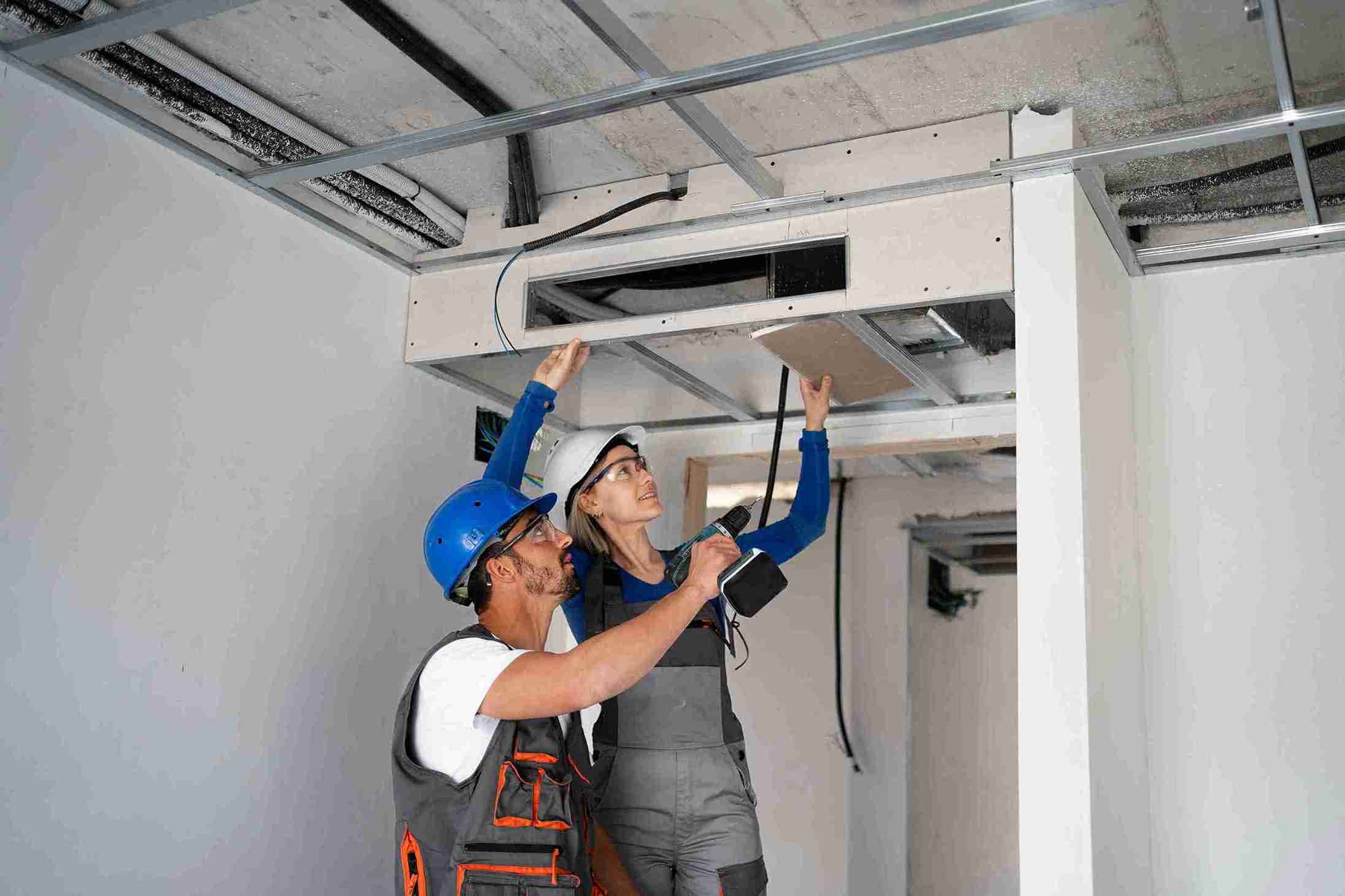
A heating and cooling system helps maintain indoor comfort as outdoor temperatures change in winter and summer. AC installation involves tasks such as evaluating your home’s cooling requirements and testing airflow and thermostat operation. Here is what to expect from the AC installation process:
Conduct a Pre-Installation Assessment
A technician evaluates room size, ceiling height, insulation, and how air moves through different spaces. The contractor reviews your home layout and cooling requirements. These factors affect how the system distributes air and maintains indoor temperature.
Your existing ductwork and electrical setup require inspection before equipment arrives. When ducts have gaps, poor connections, or buildup inside, airflow does not move properly through the system. The electrical panel and wiring must also support the new unit and its components; this stage identifies areas that need adjustments before installation starts.
The contractor also reviews different unit sizes and system types based on your home setup. When a system is too large or too small, airflow and cooling cycles do not match the space correctly. Your discussion should also include options related to SEER ratings and energy efficiency levels.
Prepare the Installation Area
The area should allow proper ventilation, service access, and safe movement around the workspace. In your home, removing obstructions and checking for hazards helps the technician work around the system without interruptions. Protective coverings also help shield floors, walls, and nearby items during installation, so set them up if you want to keep certain areas protected.
Complete the AC Unit Installation
A residential heating and cooling company will help you place the AC unit in a location that supports proper airflow and service access. The technician connects the unit to the parts already in your home, including ductwork, wiring, thermostat controls, and drainage lines. Your installer will also place the indoor and outdoor units in suitable locations. Installation services also include:
- Checking refrigerant lines, drainage, and airflow paths
- Following safety practices and local building code requirements
- Clearing tools, packaging, and installation materials from the workspace
After installation, the technician runs the system and checks how it performs through a full cycle. This review helps identify issues with airflow or electrical connections before the work is complete. Ask your technician how to change filters, adjust settings, and read basic controls to best maintain your unit.
Calibrate the AC Unit
Properly calibrating the system during AC installation helps maintain optimal airflow, temperature, and system response. The technician verifies thermostat compatibility and confirms that controls match the installed unit. This step influences how the system reads temperature and responds during use in your home. Airflow and temperature are also tested in various rooms. During the review, the technician checks refrigerant levels, system pressure, and operating noise. If these readings fall within the correct range, the system operates according to its specified settings. Technicians may also review energy efficiency requirements related to the equipment and installation. Final adjustments make sure the system functions as intended after installation.
Provide Maintenance Checklist
How you care for your system after AC installation affects how it performs throughout the year. A technician explains how often to replace filters and how buildup restricts airflow and reduces indoor circulation. Filter condition directly influences how consistently air moves through the home. Schedule seasonal tune-ups because different weather conditions place varying demands on heating and cooling equipment throughout the year.
While using the system, pay attention to weak airflow, unusual sounds, or inconsistent temperatures, since these signs point to changes in system performance that need attention. The technician also outlines a maintenance schedule based on your system type and household usage patterns. This schedule includes inspections, cleaning, thermostat checks, and airflow testing at different points in the year to support stable operation.
You can also read about Innovative Trends Shaping Commercial Design Build-Outs.
Invest in Professional AC Installation
Professional AC installation gives you access to technicians who use the right tools, take accurate system measurements, and follow proper setup procedures for residential cooling equipment. Their experience helps reduce the time spent identifying various issues; such problems include airflow issues or calibration adjustments during installation. In your home, proper installation and maintenance support steady system operation and help keep major components working together correctly over time. Contact a heating and cooling company for your AC installation and maintenance needs.